
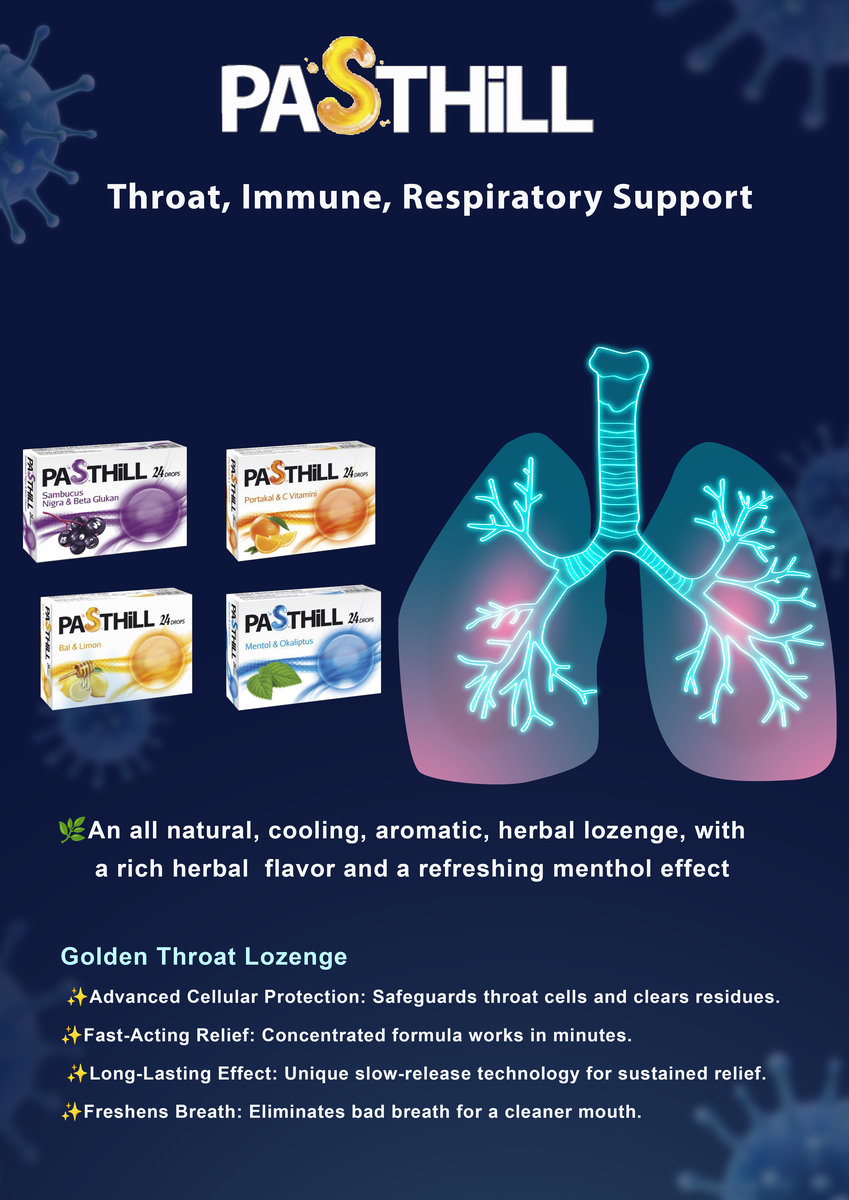
New Product
Pasthil.
Pasthil is a line of herbal lozenges (pastilles) produced by Leda Pharma (Leda İlaç), a pharmaceutical company based in Turkey. These products are primarily used to soothe throat irritation, relieve coughs, and support the immune system. They are generally classified as food supplements rather than prescription medications. Here are the key details about Pasthil products: 1. Common Ingredients Depending on the specific variety, Pasthil lozenges typically contain a combination of: Propolis: Known for its natural antibacterial and antiviral properties. Ginger & Turmeric: Used for their anti-inflammatory effects. Vitamin C: To support the immune system. Menthol/Peppermint: To provide a cooling sensation and open the airways. Honey & Lemon: To coat and soothe a dry or scratchy throat. 2. Popular Variants Leda Pharma usually offers several "flavors" or formulations, such as: Pasthil Ginger & Lemon: Focuses on refreshing the throat and reducing nausea or irritation. Pasthil Propolis: Aimed at stronger immune support and treating more painful throat conditions. Pasthil Orange: Often packed with extra Vitamin C. 3. What is it used for? Sore Throat: Relieving pain and scratchiness. Hoarseness: Helping to clear the voice. Cough Relief: Suppressing the urge to cough by keeping the throat moist. Mouth Hygiene: Refreshing the breath and providing mild antiseptic benefits. 4. How to Use Dosage: Usually, it is recommended to dissolve one lozenge slowly in the mouth every 2–3 hours. Caution: Because they often contain sugar or sweeteners, people with diabetes should check the specific packaging. They are generally not recommended for very young children due to the risk of choking.
Gentosep® (Gentamycin) 3mg Cream (15g)
Generic
Gentamicin Sulfate
Indications
Demonstrated for Burn, Skin inflammation, Seborrhetic dermatitis, Ecthyma, Excoriation, Folliculitis, Furunculosis, Creepy crawly chomps and stings, Slashes and scraped areas, Paronychia, Pyoderma gangrenosum, Skin blisters and abscesses, Stasis ulcers and contaminated skin ulcers, Bacterial, parasitic or viral superinfection, Sycosis barbae, minor surgical wounds, tainted contact dermatitis caused by vulnerable life forms.
Pharmacology
Gentamicin Sulfate is an aminoglycoside anti-microbial. It may be a demonstrated bactericidal anti-microbial dynamic against Gram-positive & Gram-negative pathogens counting E. coli, Klebsiella, Proteus, Pseudomonas aeruginosa and penicillin safe strains of Staph. aureus. In common with other aminoglycoside anti-microbials, it shows up to meddled with protein union of the bacterial cell.
Administration & Dosage
Apply 3 times daily. Before application, the area should be washed with soap and water and dried thoroughly. If crusts present, it should be removed before the application of ointment to provide maximum contact with the infecting organisms.
Interaction
Gentamicin infusion and Gentamicin treatment are contraindicated to patients extremely touchy to Gentamicin. It is contraindicated in pregnancy and myasthenia gravis.
Contraindications
Escitalopram is not recommended for patients who have a known hypersensitivity to Escitalopram, Citalopram, or any of the drug's inactive ingredients. It's not a good idea to take escitalopram and monoamine oxidase/pimozide at the same time.
Side Effect
Itching, redness, swelling or other signs of irritation.
Pregnancy & Lactation
Pregnancy Category D. Small amounts of Gentamicin have been detected in breast milk. So, it is recommended that breastfeeding should be discontinued during treatment.
Precautions & Warnings
Gentamicin Ointment should not be applied to patients hypersensitive to Gentamicin.
Therapeutic Class
SSRIs and other antidepressant medications
Storage Conditions
Protect from light and moisture by storing below 30°C. Keep the medicine out of children's reach.