
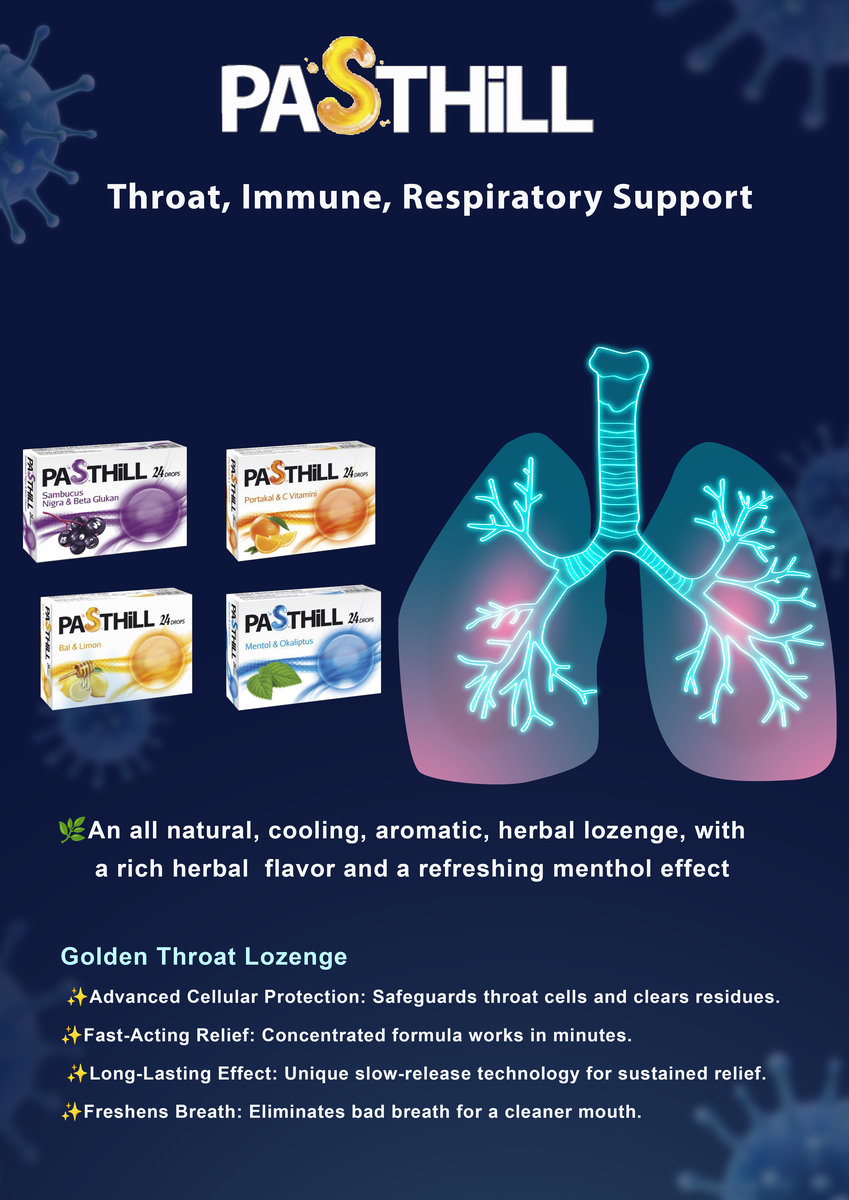
New Product
Pasthil.
Pasthil is a line of herbal lozenges (pastilles) produced by Leda Pharma (Leda İlaç), a pharmaceutical company based in Turkey. These products are primarily used to soothe throat irritation, relieve coughs, and support the immune system. They are generally classified as food supplements rather than prescription medications. Here are the key details about Pasthil products: 1. Common Ingredients Depending on the specific variety, Pasthil lozenges typically contain a combination of: Propolis: Known for its natural antibacterial and antiviral properties. Ginger & Turmeric: Used for their anti-inflammatory effects. Vitamin C: To support the immune system. Menthol/Peppermint: To provide a cooling sensation and open the airways. Honey & Lemon: To coat and soothe a dry or scratchy throat. 2. Popular Variants Leda Pharma usually offers several "flavors" or formulations, such as: Pasthil Ginger & Lemon: Focuses on refreshing the throat and reducing nausea or irritation. Pasthil Propolis: Aimed at stronger immune support and treating more painful throat conditions. Pasthil Orange: Often packed with extra Vitamin C. 3. What is it used for? Sore Throat: Relieving pain and scratchiness. Hoarseness: Helping to clear the voice. Cough Relief: Suppressing the urge to cough by keeping the throat moist. Mouth Hygiene: Refreshing the breath and providing mild antiseptic benefits. 4. How to Use Dosage: Usually, it is recommended to dissolve one lozenge slowly in the mouth every 2–3 hours. Caution: Because they often contain sugar or sweeteners, people with diabetes should check the specific packaging. They are generally not recommended for very young children due to the risk of choking.
Azmasol® (Salbutamol Inhaler) 100ug Spray 200 metered inhalation
Generic
Salbutamol
Indications
Bronchospasm: Salbutamol Inhaler is indicated for the treatment or prevention of bronchospasm in bronchial asthma and for the treatment of reversible airway obstruction associated with bronchitis and emphysema.
Exercise-Induced Bronchospasm: Salbutamol Inhaler may be used to relieve attacks of acute dyspnoea and may also be taken prophylactically before exertion or to prevent exercise-induced asthma.
Pharmacology
Salbutamol is a selective agonist of the 2-adrenoceptor. It works on the 2-adrenoceptors of bronchial smooth muscle at therapeutic levels, but has little or no effect on the 1-adrenoceptors of cardiac muscle. In reversible airway blockage, salbutamol produces short-acting (4-6 hours) bronchodilation with a rapid onset (within 5 minutes). It also inhibits the release of bronchoconstrictor mediators such as histamine, neutrophil chemotactic factor (NCF), and prostaglandin D2 via acting as an anti-inflammatory on mast cells.
Dosage & Administration
Administer Salbutamol Inhaler by oral inhalation only. Shake Salbutamol Inhaler well before each spray.
For relief of acute episodes of bronchospasm:
Adults: 1 or 2 puffs as necessary. The maximum dose is up to 8 puffs in 24 hours.
Children: Half the adult dose.
To prevent allergen-or exercise-induced bronchospasm:
Adults: 2 puffs 15 minutes prior to exercise or exposure to the allergen. The maximum dose is 2 puffs, up to 4 times a day.
Children: Half the adult dose.
Chronic therapy:
Adults: Up to 200 mcg (2 puffs) four times daily.
Children: Up to 200 mcg (2 puffs) four times daily.
Interaction
Salbutamol and non-selective beta-blocking drugs such as propranolol should generally not be prescribed together. Potentially serious hypokalaemia may result from β2-agonist therapy. Particular caution is advised in acute severe asthma as this effect may be potentiated by concomitant treatment with xanthine derivatives, steroids, diuretics, and by hypoxia. It is recommended that serum potassium levels are monitored in such situations.
Contraindications
Salbutamol inhaler is contraindicated in patients with a history of hypersensitivity to salbutamol or any other components of Salbutamol inhaler.
Side Effects
Salbutamol is easily tolerated by most people. During inhalation, just a few adverse effects have been recorded. Tremors, anxiety, muscle cramps, headache, palpitation, a compensatory slight rise in heart rate, cardiac arrhythmias (including atrial fibrillation, supraventricular tachycardia, and extrasystoles), and tachycardia are all possible symptoms. Salbutamol inhalation can cause mouth and throat discomfort.
Pregnancy & Lactation
Pregnancy Classification C. In pregnant women, there are no sufficient and well-controlled studies using salbutamol inhaler or salbutamol sulfate. During pregnancy, this inhaler should only be used if the possible benefit outweighs the potential risk to the fetus. The components of the Salbutamol inhaler are not known to be excreted in human milk. When administering this inhaler to a nursing mother, exercise caution.
Precautions & Warnings
Paradoxical Bronchospasm: Inhaled salbutamol sulfate can cause life-threatening paradoxical bronchospasm. If paradoxical bronchospasm occurs, the Salbutamol inhaler should be stopped right away and another treatment plan implemented. When it comes to inhaled formulations, it's important to remember that paradoxical bronchospasm frequently develops after the first use of a new canister.
Cardiovascular Effects: As with all other 2-adrenergic agonists, salbutamol inhaler might cause clinically significant cardiovascular effects in some people, such as changes in pulse rate or blood pressure. Salbutamol inhaler may need to be stopped if such side effects arise. Furthermore, bet
Therapeutic Class
Short-acting selective & β2-adrenoceptor stimulants
Storage Conditions
Protect from light and moisture by storing in a cool, dry place below 30°C. Keep out of children's reach.