
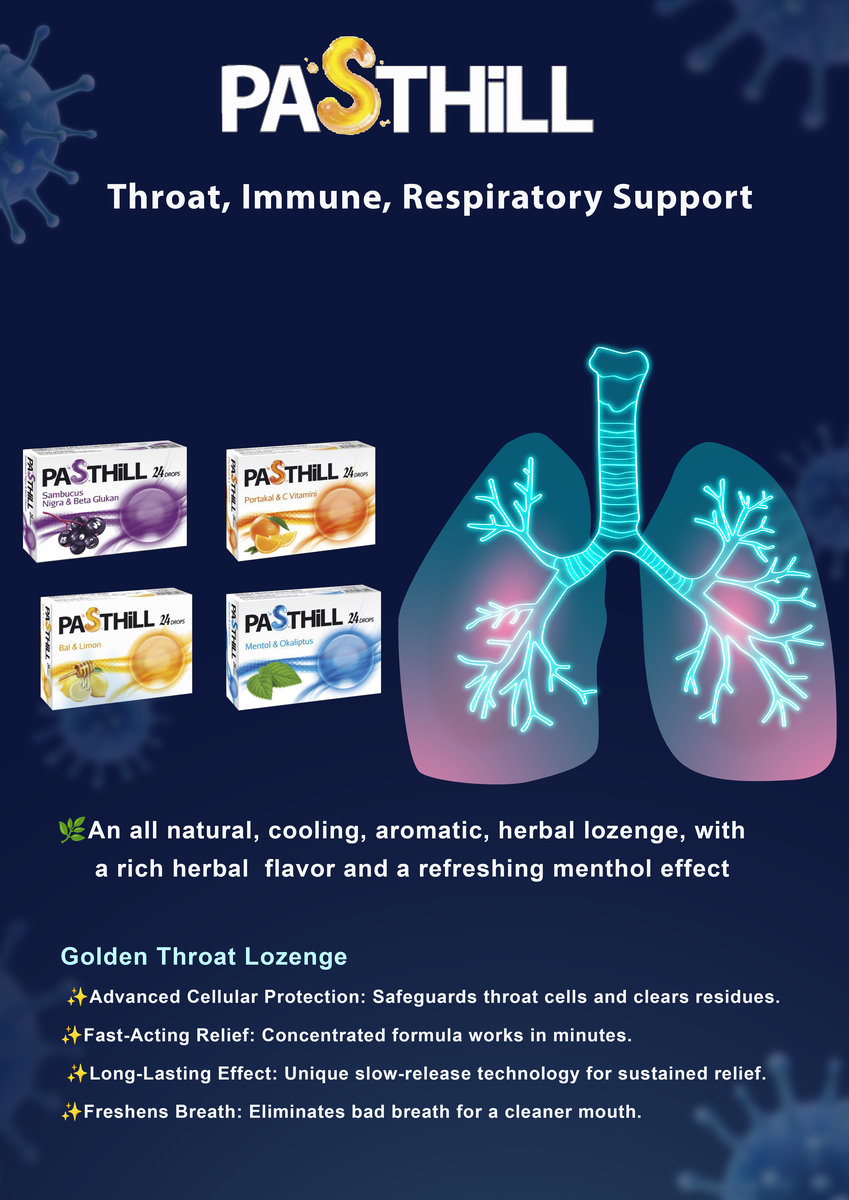
New Product
Pasthil.
Pasthil is a line of herbal lozenges (pastilles) produced by Leda Pharma (Leda İlaç), a pharmaceutical company based in Turkey. These products are primarily used to soothe throat irritation, relieve coughs, and support the immune system. They are generally classified as food supplements rather than prescription medications. Here are the key details about Pasthil products: 1. Common Ingredients Depending on the specific variety, Pasthil lozenges typically contain a combination of: Propolis: Known for its natural antibacterial and antiviral properties. Ginger & Turmeric: Used for their anti-inflammatory effects. Vitamin C: To support the immune system. Menthol/Peppermint: To provide a cooling sensation and open the airways. Honey & Lemon: To coat and soothe a dry or scratchy throat. 2. Popular Variants Leda Pharma usually offers several "flavors" or formulations, such as: Pasthil Ginger & Lemon: Focuses on refreshing the throat and reducing nausea or irritation. Pasthil Propolis: Aimed at stronger immune support and treating more painful throat conditions. Pasthil Orange: Often packed with extra Vitamin C. 3. What is it used for? Sore Throat: Relieving pain and scratchiness. Hoarseness: Helping to clear the voice. Cough Relief: Suppressing the urge to cough by keeping the throat moist. Mouth Hygiene: Refreshing the breath and providing mild antiseptic benefits. 4. How to Use Dosage: Usually, it is recommended to dissolve one lozenge slowly in the mouth every 2–3 hours. Caution: Because they often contain sugar or sweeteners, people with diabetes should check the specific packaging. They are generally not recommended for very young children due to the risk of choking.
Axodin® 180 (fexofenadine) 180mg Tablet ( 3*10) 30 tab
Generic
Fexofenadine Hydrochloride
Indications
Seasonal Allergic Rhinitis: Fexo: Tablets are indicated for the relief of symptoms associated with seasonal allergic rhinitis in adults and children 6 years of age and older. Fexo@ Oral Suspension is indicated for the relief of symptoms associated with seasonal allergic rhinitis in childr.en 2 to 11 years of age. Sym ptoms to treat effectively: sneezing, rh i n o rrhea, itchy nose/palate/th roat, itchy/wate rylred eyes. Chronic ldiopathic Urticaria:Fexo@Tablets are rndicated for treatment of uncomplicated skrn manifestations of chronic idiopathic urticaria in adults and chi dren 6 years of age and older. Fexoo Ora Suspension is indicated for treatment of uncomplicated skin manifestations of chronic id;opathic urticaria in children 6 months to 1l years of age. Fexofenadine Hydrochloride significantly reduces pruritus and the number ofwheals.
Pharmacology
Fexofenadlne Hydrochloride is an antihistamine with selective peripheral H,-receptor antagonist activity. Fexofenadine is rapidly absorbed after oral doses with peak plasma concentrations being reached in 2-3 hours. lt is about 60toTOo/o bound to plasma proteins. Abolt 50/o of the total doses is metabolized, mostly by the intestinal mucosa, ,,vith only 0.5 to 1 .570 of the dose undergoing hepatic biotransformation by the cyto-chrome P456 system. E imination half-life of 14 hours has been reported although this may be prolonged in patients with renal impairment. Excretion is mainly in the faeces with only 100/o berng present in the urine. Fexofenadine does not appear to cross the blood-brain barrier.
Dosage & Administration
Seasonal Allergic Rhinitis-
Adults and children 12 years and older:
Tablet: 60 mg twice daily or 120 mg once daily or 180 mg once daily
In case of impaired renal function: 60 mg once daily
Children from 6 to 11 years:
Tablet: 30 mg twice daily or 60 mg once daily
In case of impaired renal function: 30 mg once daily
Children from 2 to 11 years
Suspension: 30 mg or 5 ml twice daily
In case of impaired renal function: 30 mg or 5 ml once daily
Chronic Idiopathic Urticaria-
Adults and children 12 years and older:
Tablet: 60 mg twice daily or 120 mg once daily or 180 mg once daily
In case of impaired renal function: 60 mg once daily
Children from 6 to 11 years:
Tablet: 30 mg twice daily or 60 mg once daily
In case of impaired renal function: 30 mg once daily
Children from 6 months to less than 2 years:
Suspension: 15 mg or 2.5 ml (1/2 tsp) twice daily
In case of impaired renal function: 15 mg or 2.5 ml (1/2 tsp) once daily
Children from 2 to 11 years:
Suspension: 30 mg or 5 ml (1 tsp) twice daily
In case of impaired renal function: 30 mg or 5 ml (1 tsp) once daily
Interaction
Plasma concentrations ofFexofenadinehavgbeen increased when given with Erythromycin or Ketoconazole.Antacid containing Aluminium and Magnesium Hydroxide reduces the absorption of Fexofenadine. Fruit juices including grapefruit may reduce the bioavailability of Fexofenadine and use together should be avoided.
Contraindications
Fexofenadine is contraindicated in patients with known hypersensltivity to any ofthe ingredients.
Side Effects
Headache, tiredness, sleepiness, nausea, dry mouth, and gastrointestinal problems are all common adverse effects.
Pregnancy & Lactation
Fexofenadine Hydrochloride is classified as pregnancy category C by the US Food and Drug Administration. So, unless the potential advantages to the other outweigh the potential dangers to the fetus, Fexofenadine Hydrochloride should be avoided during pregnancy and breastfeeding.
Precautions & Warnings
Patients who are old or have impaired renal function should be treated with caution.
Therapeutic Class
H2 receptor antagonist
Storage Conditions
Tablet: Store below 30C, protect from light & moisture. Suspension: Store below 30'C. Protect from light and moisture, Keep out of children's reach.