
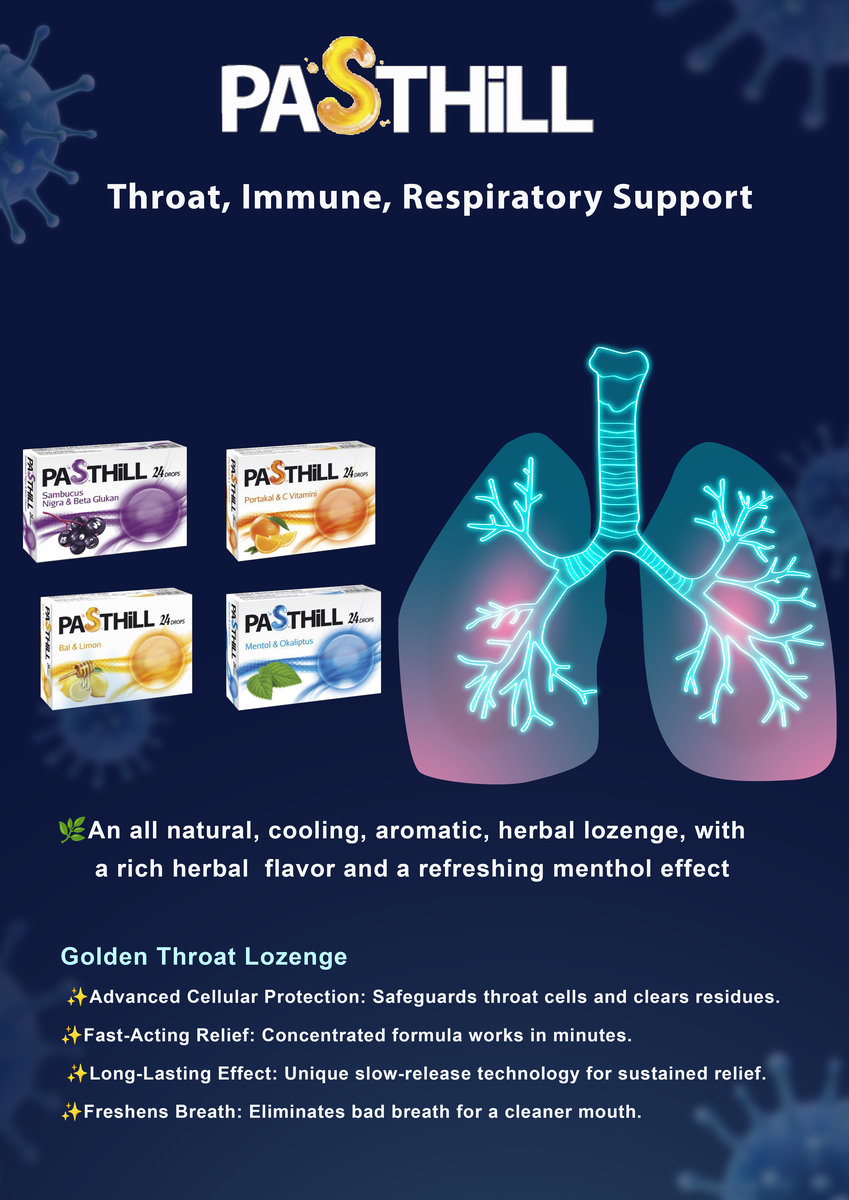
New Product
Pasthil.
Pasthil is a line of herbal lozenges (pastilles) produced by Leda Pharma (Leda İlaç), a pharmaceutical company based in Turkey. These products are primarily used to soothe throat irritation, relieve coughs, and support the immune system. They are generally classified as food supplements rather than prescription medications. Here are the key details about Pasthil products: 1. Common Ingredients Depending on the specific variety, Pasthil lozenges typically contain a combination of: Propolis: Known for its natural antibacterial and antiviral properties. Ginger & Turmeric: Used for their anti-inflammatory effects. Vitamin C: To support the immune system. Menthol/Peppermint: To provide a cooling sensation and open the airways. Honey & Lemon: To coat and soothe a dry or scratchy throat. 2. Popular Variants Leda Pharma usually offers several "flavors" or formulations, such as: Pasthil Ginger & Lemon: Focuses on refreshing the throat and reducing nausea or irritation. Pasthil Propolis: Aimed at stronger immune support and treating more painful throat conditions. Pasthil Orange: Often packed with extra Vitamin C. 3. What is it used for? Sore Throat: Relieving pain and scratchiness. Hoarseness: Helping to clear the voice. Cough Relief: Suppressing the urge to cough by keeping the throat moist. Mouth Hygiene: Refreshing the breath and providing mild antiseptic benefits. 4. How to Use Dosage: Usually, it is recommended to dissolve one lozenge slowly in the mouth every 2–3 hours. Caution: Because they often contain sugar or sweeteners, people with diabetes should check the specific packaging. They are generally not recommended for very young children due to the risk of choking.
Atrizin® (Cetrizine Hydrochloride) 10mg Tablet (15*10) 150 tab

Indications
It is indicated for the relief of symptoms associated with seasonal & perennial allergic rhinitis. It is also indicated for the treatment of the uncomplicated skin manifestations of chronic idiopathic urticaria and allergen induced asthma.
Therapeutic Class
Sedating Anti-histamine
Pharmacology
Cetirizine Hydrochloride is a potent H1 receptor antagonist without any significant anticholinergic and antiserotonic effects. At pharmacologically active dose levels, it has almost no drowsiness effect and does not cause behavioural changes. It inhibits the histamine mediated early phase of the allergic reaction and also reduces the migration of inflammatory cells and the release of mediators associated with the late phase of the allergic reaction.
Dosage & Administration
Adults and Children 6 years and older: 1 tablet or 2 teaspoonfuls daily (or 1 teaspoonful twice daily).
Children 2-6 years: 1 teaspoonful once daily or 1/2 teaspoonful twice daily.
Children 6 months to 2 years : 1/2 teaspoonful once daily. The dose in children 12-23 months of age can be increased to a maximum dose as 1/2 teaspoonful every 12 hours.
Interaction
No clinically significant drug interactions have been found with Theophylline, Azithromycin, Pseudoephedrine, Ketoconazole or Erythromycin and with other drugs.
Contraindications
It is contraindicated in patients with a history of hypersensitivity to Cetirizine or hydroxyzine.
Side Effects
The most common side effects that occurred more frequently on Cetirizine is somnolence.
Pregnancy & Lactation
US FDA Pregnancy Category of Cetirizine Hydrochloride is B. There are, however, no adequate and well-controlled studies in pregnant women. Because animal reproduction studies are not always predictive of human response, this drug should be used during pregnancy only if clearly needed. Cetirizine Hydrochloride has been shown to be excreted in human milk. So, caution should be exercised when Cetirizine Hydrochloride is administered to a nursing woman.
Precautions & Warnings
Caution should be exercised when driving a car or operating a heavy machinery.